



Why Cable Fireproof Coating Is Important for Safety Systems
Cable fireproof coating is one of the most practical passive fire protection tools available for electrical infrastructure. When a fire starts, unprotected cables act like a highway for flames — carrying heat and combustion from one area to the next. A properly applied fire-resistant cable coating forms a thermal barrier that slows flame spread, limits toxic gas release, and keeps critical circuits alive long enough for evacuation and emergency response. For engineers, cable manufacturers, and infrastructure contractors, this coating is not optional. It is a technical requirement that directly affects how a building or facility performs under fire conditions.
Understanding Cable Fireproof Coating: What It Is and How It Works
What the Coating Actually Does
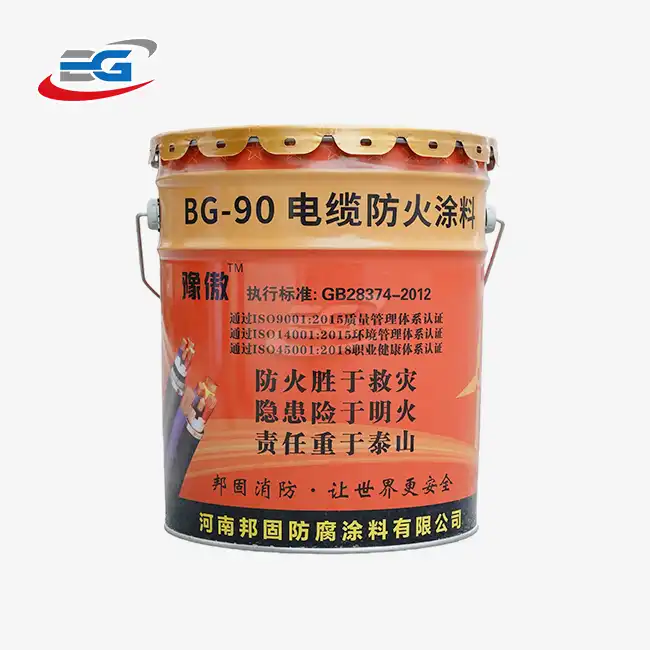
A cable fireproof coating is a layer of protection that is put on the outside of communication or power lines. As a safety measure, it stops fires from spreading along cable runs, which is a big problem in vertical shafts, cable trays, and tube installations. When the coating is exposed to high heat, it responds chemically and grows into a layer of carbonized char that stops oxygen and keeps the wire from losing more heat.
The Intumescent Mechanism
Intumescent chemistry is used in most high-performance formulations. When the temperature goes up, the skin gets 10–50 times thicker than it was before. This expansion makes a layer of foam that doesn't conduct electricity well, which slows the flow of heat. As a result, circuits below the covering can keep working for a long time, even if there is a fire close. Banggu Fanghuo's covering on the cables is fireproof for at least two hours and can handle temperatures up to 1300°C.
Standards That Define Performance
Engineers choose coats based on test results that have been checked against well-known standards. Some common sources are IEC 60332-3 for figuring out how flames spread along cable bundles, UL 1666 for installing riser cables, and ASTM E119 for figuring out how long something can last in a fire. Products that meet these standards give procurement teams the proof they need to get project approval, make sure they're in line with insurance requirements, and pass regulatory inspection.
Benefits of Using Cable Fireproof Coating in Safety Systems
Maintaining Circuit Integrity During Fire Events
In case of a fire, power cables, emergency lighting circuits, and fire alarm wiring must all stay turned on. The evacuation systems and suppression limits will not work if those wires break. A cable fireproof coating gives those wires more time to work, which can directly affect how safely people can leave. This is especially important in places like high-rise buildings, subway stations, and data centers where a single circuit failure can cause a chain reaction of problems.
Reducing Downtime and Replacement Costs
Cables that aren't protected and are damaged by heat often need to be replaced completely after a fire. That repair process costs a lot and takes a long time, especially for sites that are hidden or hard to get to. The cable fireproof coating lowers the chance of losing all of your cables, which cuts down on repair costs and downtime.
Meeting Environmental and Regulatory Requirements
When PVC wire jackets are burned, chlorine-based gases are released that damage equipment and are bad for your health. A halogen-free cable fireproof coating lowers this risk. Banggu Fanghuo's water-based formula has a VOC level of ≤120 g/L, is safe for the environment, and doesn't change the way the wire conducts electricity after it cures.
Types of Cable Fireproof Coatings: Comparing Options for Industrial Use
Water-Based vs. Solvent-Based Formulations
Water-based paints don't smell bad, are VOC compliant (≤120 g/L), and can be used safely indoors. They work well in most enclosed spaces, like business buildings, cable shafts, and substations. Solvent-based choices stick better at first in wet or cold conditions, but they have higher VOC levels (≤650 g/L) and need to be handled with care because they are dangerous (UN1263 classification applies). The best choice relies on your surroundings, how well the air flows, and the rules in your area.
Intumescent vs. Non-Intumescent Options
When heated, intumescent coatings expand and act as active thermal insulation by making char. Coatings that don't catch fire mainly guard by abrading the surface and keeping heat from spreading without expanding. It is best to use intumescent chemistry for most cable-specific applications, especially vertical cable shafts where the chimney effect speeds up flame travel. Banggu Fanghuo makes both kinds to meet the needs of different projects.
Coating Thickness and Application Method
Thin-film coatings in the 0.5–1 mm range are common for wires because coats that are too thick make them less flexible and harder to install. Thicker coatings make the fire resistance last longer, but they need to be checked to make sure they won't crack when the wire is bent. You can use a spray, a brush, or a roller to apply it. Spray application makes the most uniform film and works best for cable manufacturers who want to add cable fireproof coating to the process of making cables.
How to Choose the Right Cable Fireproof Coating for Your Project
Match the Coating to the Cable Jacket Material
Not all coatings stick to PVC, PE, and XLPE jacket materials the same way. If the coating formula isn't tested to make sure it works with polyolefin-based jackets, low surface energy can make adhesion fail. Before you decide on a supplier, ask for adhesion test data for the material of your jacket. Banggu Fanghuo gives information on testing for compatibility between PVC and XLPE surfaces, and normal test conditions confirm adhesion grade 0.
Evaluate Environmental Exposure
Standard water-based formulations can be used for indoor wire setups in safe places. Under normal conditions, they have a service life of more than five years. Applications that will be outside or uncovered need a topcoat that is resistant to UV light to keep the covering from wearing down from the weather. Conditions of application are also important. The base should stay at least 3°C above the dew point and the temperature should be between +5°C and +40°C. The relative humidity should be below 85%.
Consider Supplier Support and OEM Flexibility
When cable makers add cable fireproof coating to their production line, how responsive the supplier is and how well they can work with OEMs are just as important as how well the product works. Banggu Fanghuo works with both OEM and ODM customers, so cable makers can change the packing, branding, and recipe to suit their needs. For international procurement teams, we offer bulk pricing, stable batch consistency, and technical documentation (TDS, SDS) in English.
Best Practices for Applying Cable Fireproof Coatings in Industrial Settings
Surface Preparation Before Application
Before putting on a cable fireproof coating, clean the cable's surface to get rid of dust, oil, and water. Surfaces that are dirty make it harder for things to stick to them and make weak spots where the protective layer can peel off when heated up. For uses on a production line, consistent surface preparation methods have a direct effect on the quality of the coating from one batch to the next.
Application Technique and Thickness Control
Use two to three coats to get the dry film thickness you want, which should be between 0.5 and 1 mm. Let the top of each coat dry for one to two hours at room temperature before adding the next one. It takes about 24 hours to fully cure. During application, keep an eye on the wet film thickness to make sure it stays within the limits. Deviations from this range have an effect on both fire resistance and flexibility.
Ongoing Inspection and Maintenance
Set up regular visual checks for cracks, peeling, or discoloration, especially after physical damage or stress from the environment. Spot treatment can fix damage in one place without having to replace the whole wire. If you need to use a UV topcoat outside, check the state of the finish every one to two years and reapply it before the base layer is exposed to weathering.
Conclusion
Choosing cable fireproof coating is a technical choice that has real effects on safety. When used in industrial and commercial settings, the right intumescent or fire-resistant cable fireproof coating protects circuit integrity, limits toxic gas emissions, and lowers the total damage caused by fire. From people who make cables on a production line to people who work on pipes, data centers, and high-rises as infrastructure workers, choosing and applying the right coating is what stops a fire from spreading. Banggu Fanghuo has met these needs for more than 30 years by providing certified goods, OEM flexibility, and detailed paperwork that fits the needs of global projects.
FAQ
What is the difference between a cable fireproof coating and fire retardant paint?
A cable fireproof coating is made to work with flexible materials like cable jackets. It keeps sticking together even when bent, and it doesn't crack when used. Paint that doesn't catch fire is usually made for hard surfaces like steel or concrete. It's possible for normal fire retardant paint to separate from wires, make the insulation less effective, and not meet cable-specific fire test standards like IEC 60332.
How thick should the coating be on industrial cables?
More than two hours of fire protection can be achieved with a dry film thickness of 0.5 to 1 mm for most power and control lines. Some high-risk uses may need a little more thickness, but cables that are thicker than 1.5 mm without being tested for flexibility risk cracking when they are bent. Make sure that the width needs match the fire test standard that applies to your project.
Can I apply fireproof coating to cables already installed in a building?
Yes. A brush or roller can be used to apply it to existing wire and cable trays that are already in place. Before you put it on, make sure the wire surface is clean and dry. The right level of protection can be reached with two to three coats applied at room temperature. This method of retrofitting is often used to fix up buildings and keep infrastructure in good shape.
Partner with Banggu Fanghuo for Your Fire Protection Needs
Banggu Fanghuo is a reliable company that makes cable fireproof coating with ISO 9001, ISO 14001, and ISO 45001 certifications. Our goods are fire-resistant for at least two hours, achieve adhesion grade 0, and can withstand temperatures up to 1300°C. We can handle OEM sales, bulk supplies, and TDS/SDS in English for jobs around the world. To get samples or a quote for a job, email our team at admin@bgfireproof.com or go to bgfireproof.com.
References
1. National Fire Protection Association (NFPA). NFPA 70: National Electrical Code. 2023.
2. International Electrotechnical Commission. IEC 60332-3: Tests on Electric and Optical Fibre Cables Under Fire Conditions. 2018.
3. Underwriters Laboratories. UL 1666: Standard for Riser Cables. 2020.
4. ASTM International. ASTM E119: Standard Test Methods for Fire Tests of Building Construction and Materials. 2022.
5. Society of Fire Protection Engineers. SFPE Handbook of Fire Protection Engineering, 5th ed. Springer, 2016.
6. British Standards Institution. BS EN 13501-6: Fire Classification of Construction Products — Classification Using Data from Reaction to Fire Tests on Electric Cables. 2018.

USER EVALUATE
Here is the customer's evaluation of us
YOU MAY LIKE
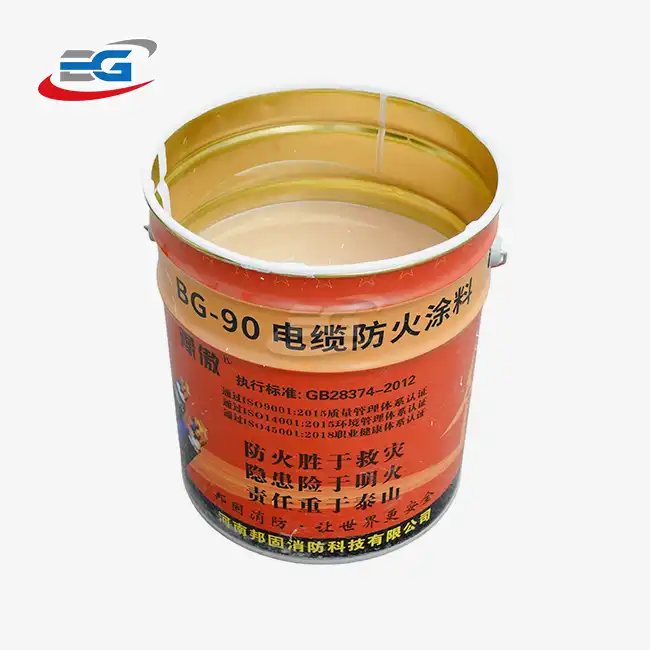 VIEW MOREWire and cable fire retardant coating
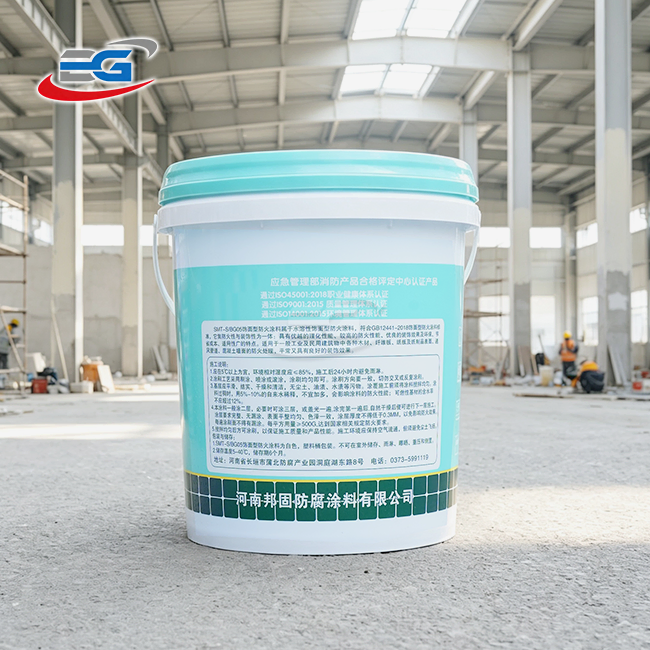 VIEW MOREFinishing type fire retardant coating for residential buildings
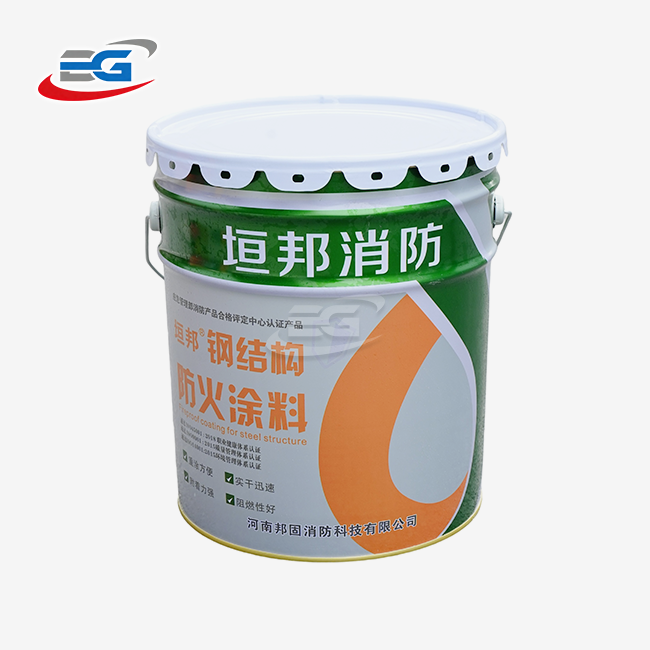 VIEW MOREOutdoor intumescent fire retardant coating for steel structure
 VIEW MOREFire Retardant Coating for Steel Structures
 VIEW MOREanti-corrosion fireproof coating
 VIEW MOREfireproof coating with certificate
 VIEW MOREflame proof coating
 VIEW MOREfire protection coating