



How Durable Is Fireproof Coating for Steel Structures in Practice?
When engineers and project owners ask about real-world longevity, the answer depends on coating type, environment, and system design. A properly specified fireproof coating for steel structures durable enough for outdoor or heavy-corrosion service can protect structural steel for 12 years or more—and up to 20+ years indoors with minimal upkeep.
Products from Banggu Fanghuo, for example, achieve a fire resistance limit of ≥1.7 hours, withstand temperatures up to 1,000°C, and hold adhesion Grade 1 even under cyclic thermal stress. In practice, durability is not just about the coating itself—it's about how well the full system is matched to the environment.
Understanding the Durability of Fireproof Coatings for Steel Structures
What "Durable" Actually Means for Fire Protection Coatings
Steel loses roughly 50% of its load-bearing strength when it reaches 550°C. A durable fire protection coating delays that threshold by forming an insulating char layer under heat, keeping structural steel stable long enough for evacuation and firefighting. Durability here means the coating retains this ability year after year—not just the day it's applied.
Fire-Resistant vs. Fireproof: Why the Distinction Matters
"Fire-resistant" typically describes a coating that slows heat transfer for a rated period. "Fireproof" implies indefinite resistance, which no coating fully achieves. For procurement purposes, what matters is the rated fire resistance limit (e.g., ≥1.7 hours per GB 14907-2018) and whether the coating maintains that rating throughout its design service life under the actual site conditions.
How Durability Reduces Lifecycle Costs
Frequent recoating on a bridge or port structure carries enormous hidden costs—scaffold erection, abrasive blasting, disposal, and production downtime. A coating system engineered for 12+ years of outdoor service reduces these cycles significantly. For heavy industrial projects with procurement values between $200,000 and $800,000, selecting a long-life system from a verified fireproof coating supplier pays back quickly.
Types of Fireproof Coatings and Their Durability Comparison
Inorganic vs. Organic Formulations
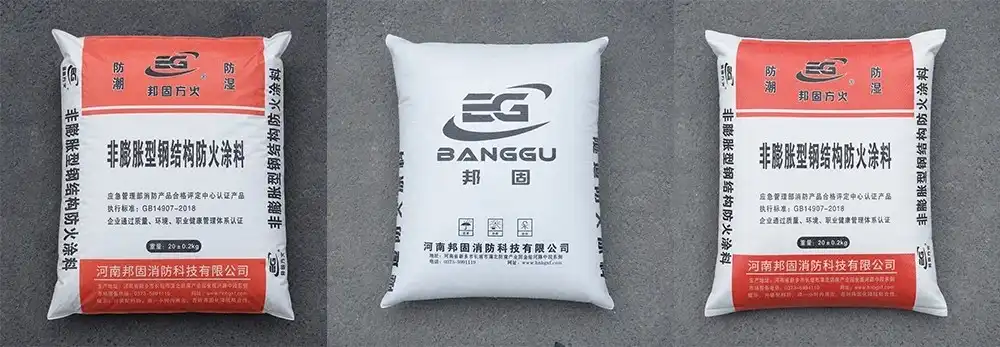
Inorganic cement fireproof coating for steel structures durable that are fireproof really do keep water and chemicals out most of the time. They can be used in workplaces and stores because of this. They get rougher after six months, but they aren't dangerous and you can drive with them. Some types, like those made from organic materials or solvents, stick to complex shapes better. However, they can catch fire (UN1263) and can't have more than 650 g/L of VOC.
Intumescent Coatings: Performance Under Real Conditions
It's the carbon foam cover that spreads out and keeps steel warm when it gets hot. Fire-resistant paints that are water-based (VOC ≤120 g/L) work best on steel beams inside of homes, shops, businesses, and other buildings. They can hold more than 0.3 MPa of force or less than 0.15 MPa of force, which means they are good for light buildings. You need a finish that doesn't peel or chalk and stays stable under UV light if you want to leave something outside for more than five years.
Eco-Friendly Options and Procurement Considerations
It is safer to move and store fireproof coverings made with water because they are not dangerous. They are safe to keep between 5°C and 45°C for a year. This is something else that low-VOC systems help EPC companies do. Environmental permits are becoming more important in public building bids. This is very important in places that get a lot of water or are close to water.
Evaluating Fireproof Coating Durability Standards and Performance Metrics
Key Certification Standards for Global Projects
Most of the time, this is because projects in the US or other countries need goods made in China that meet the standards set by GB 14907-2018, ASTM E119 or UL 263 for fire resistance tests, and ISO 12944 for rust protection groups C1–C5. ISO 9001, ISO 14001, ISO 45001, and CE have all given their approval to Banggu Fanghuo. In other words, it can connect most of North America, Southeast Asia, and the Middle East.
Critical Technical Parameters That Predict Longevity
In the long run, how well the glue sticks depends on how it is put on. The substrate should be at least 3°C above the dew point, and the humidity in the right window shouldn't be more than 85%. Inside, it should be warm (+5°C to +40°C). People breaking these rules is a big reason why field projects fail too soon. Also, it's important to control how thick the coating is. If it's too thick or too thin, it could break. It won't hold fire as well if it's too thin.
Environmental Resistance Metrics Worth Specifying
The coating system of fireproof coating for steel structures durable for seaside bridges, port cranes, or platforms in the ocean needs to be able to handle ISO 9227 salt spray tests and short cycles of weathering. The finish on steel that will be used inside doesn't have to be resistant to UV light, but if it's going to be outside for more than five years, it has to be. That's how the system works. If you say this now, you can avoid expensive system problems in the third or fourth year.
Practical Longevity and Maintenance of Fireproof Coatings on Steel Structures
Real-World Lifespan Data Across Industrial Environments
If you apply intumescent coatings correctly, they should last between 10 and 15 years in C3 environments (moderate humidity, inland industrial). Based on data gathered from industrial steel buildings in the field, this is what we think. In C5 salty places like high humidity and ocean salt spray, the same layer might start to break down in 3–5 years if you don't put a topcoat on top of it. This is not just the covering layer at the bottom that makes it different. The major difference is also how the system is put together and the finish on top.
Inspection and Damage Detection Practices
A visual inspection once a year is the very least that should be done in this field. Inspectors look for damage from drops and hits, surface chalking, and tiny cracks in the surface. Even though they don't crack or peel after 72 hours of tests in the lab, water-based coats still need to be checked out in the field. If there is damage in one area, it needs to be fixed before water gets under it and makes it flake off everyplace.
When and How to Recoat Without Full Removal
Protective coatings today are great because they can be fixed up with a brush or spray without having to take off the whole surface. It's possible as long as the old layer stays on top of the new one. It costs a lot less to keep big buildings in good shape now. Banggu Fanghuo helps the workers do this by showing them what to do and telling them how to keep the tools in good shape for a long time.
Buying Guide: How to Select Durable Fireproof Coatings for Steel Structures
Matching the Coating System to the Environment
If you want to buy fireproof coating for steel structures durable, you should find out if the corrosion and exposure environment is low-humidity indoors, open industry, or the C5 sea. If you want to use it outside, you'll need a UV finish, a protection layer, and a base coat for each type. When you buy the system as a whole instead of getting parts from different places, you don't have to worry about whether or not the parts will work together.
Before they give the green light for a blueprint, procurement experts should make sure of these main points:
- Fire resistance limit: Confirm the rated period (e.g., ≥1.7 hours) aligns with structural design requirements and local building code.
- Adhesion and mechanical strength: Adhesion Grade 1 and bonding strength ≥0.15 MPa are minimum thresholds for structural steel applications.
- Weathering and topcoat system: Outdoor service beyond five years requires a verified UV-stable topcoat compatible with the fireproof base layer—this must be tested as a combined system, not separately.
- Certifications and test documentation: Request salt spray test reports, aging test data, and fire resistance certificates. These are required for most tender submissions and acceptance inspections.
The coating system will work well in a coastal port or oil plant for as long as these things are true.
Supplier Reliability and Delivery Logistics
It's just as important for a business to be able to offer a lot of items as it is for their goods to work well for projects that need tens to hundreds of metric tons. Both land and sea transportation rights are owned by Bangladesh Fanghuo. This makes it simple and quick to send supplies to EPC project sites along the coast. Things that were made with water or chemicals can be kept for a year, but things that were made with cement can only be kept for six months. The purchase must happen at the same time as the job so that nothing is wasted.
Conclusion
To use fireproof coating for steel structures durable outside after five years, pick the right product for the job, put it on at the right time for the weather and humidity, and then cover it with the right finish. The coating system will last longer because of this. A lot of rain falls on bridges, ports, and chemical plants.
The fire resistance rating and physical integrity of a system from a certified fireproof coating for steel structures manufacturer can be kept for at least 12 years if it is used as directed. If you have that window checked out and fixed up a few times a year, it will stay open longer. It costs less to check the system specs right the first time than to try again after something went wrong.
FAQ
How often should fireproof coatings on outdoor steel structures be inspected?
Annual visual inspection is standard practice. For C5 marine or high-chemical environments, bi-annual inspections are advisable. Inspectors check for cracking, chalking, edge lifting, and impact damage. Early detection allows spot repairs that prevent wider delamination.
Can fireproof coating be applied over existing steel without removing old paint?
It depends on the adhesion condition of the existing layer. If the underlying coat is sound and compatible, a new fireproof layer can be applied directly in many cases. A pull-off adhesion test on the existing surface should be conducted first. Banggu Fanghuo technical teams can advise based on site conditions.
What environmental factors most affect coating durability outdoors?
UV radiation, salt spray, and temperature cycling are the three primary degradation drivers for outdoor coatings. Without a UV-stable topcoat, organic intumescent layers will chalk and lose adhesion within a few years in coastal environments. High humidity (above 85% RH) during application also permanently weakens adhesion, regardless of coating quality.
Does indoor fireproof coating need a topcoat?
No. Indoor applications do not require UV or weather-resistant topcoats. A decorative topcoat may be added for aesthetic reasons, but it is not structurally necessary for performance in low-humidity interior environments.
Get a Durable Fire Protection System Quote from Banggu Fanghuo
A fire safety system that works and lasts is important for your steel building to pass inspection on the first day. Since more than 30 years ago, Banggu Fanghuo has been making coatings. The company is certified by ISO 9001, 14001, 45001, and CE. For manufacturers of steel structures durable, they are an approved fireproof coating. They can also handle big jobs because they accept OEM/ODM. Right away, our skilled staff can help you discover a system that matches your needs and prices. bgfireproof.com or admin@bgfireproof.com is how to get in touch with us.
References
1. Society for Protective Coatings (SSPC). Steel Structures Painting Manual, Volume 2: Systems and Specifications. 2021.
2. International Organization for Standardization. ISO 12944: Paints and Varnishes—Corrosion Protection of Steel Structures by Protective Paint Systems. 2018.
3. ASTM International. ASTM E119: Standard Test Methods for Fire Tests of Building Construction and Materials. 2022.
4. Bisby, L. A., Gales, J., & Maluk, C. "A contemporary review of large-scale non-standard structural fire testing." Fire Science Reviews, 2013.
5. Corus Construction & Industrial. Fire Protection of Structural Steelwork: Design Guide. 2006.
6. National Fire Protection Association (NFPA). NFPA 5000: Building Construction and Safety Code. 2021.

USER EVALUATE
Here is the customer's evaluation of us
YOU MAY LIKE
 VIEW MOREFinishing type fire retardant coating eco-friendly
 VIEW MORENon-Toxic Finishing Type Fire Retardant Coating
 VIEW MOREEasy To Clean Finishing Type Fire Retardant Coating
 VIEW MOREFire retardant finish coating
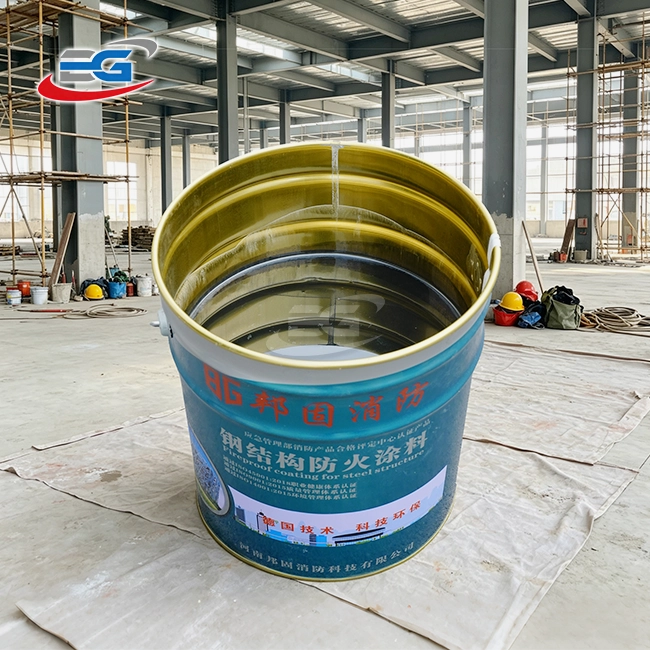 VIEW MOREFireproof Coating for Steel Structures non-toxic
 VIEW MOREFireproof Coating for Steel Structures eco-friendly
 VIEW MORElong lasting fireproof coating
 VIEW MOREfire retardant coating