



Fire Retardant Paint vs Wraps for Electrical Cable Protection
When evaluating fire protection options for electrical infrastructure, the debate between fire retardant paint for electrical cables and intumescent wraps comes down to project scope, installation environment, and compliance requirements. Coatings bond directly to cable insulation—PVC, XLPE, or PE—forming a carbonaceous char barrier when exposed to heat, with fire resistance ratings reaching ≥1.6 hours. Wraps provide a physical sleeve layer suited to discrete cable runs. For large-scale cable trays, vertical shafts, and tunnel installations, paint-based systems typically deliver better coverage efficiency and lower material cost per linear meter.
Understanding Fire Retardant Solutions for Electrical Cables
There are two main types of passive fire protection for cable systems: coatings that are applied and physical barriers. Engineering teams can choose the right product before they start buying it if they know how each one works chemically and mechanically.
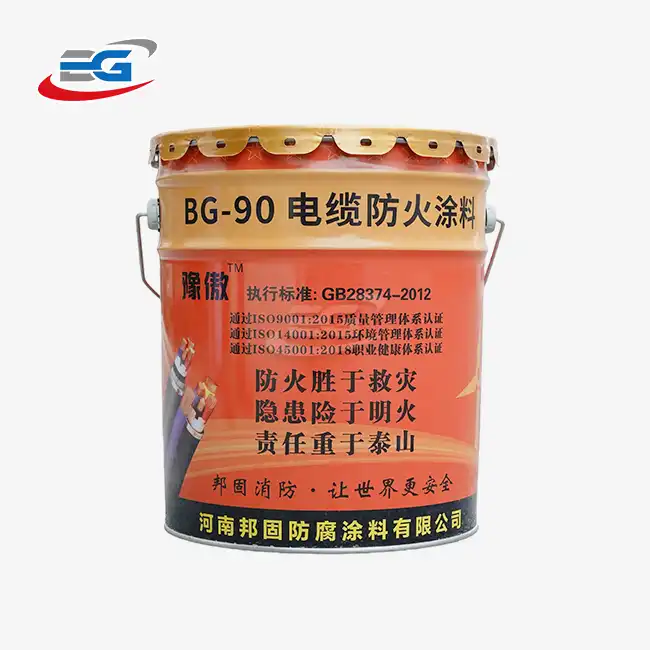
How Intumescent Cable Coatings Work
There is a carbon source, an acid catalyst, and a blowing agent in an intumescent layer. When the surface temperature goes above about 150–200 °C, these parts react, making the film 10–50 times thicker than it was before. The char layer that forms works as a thermal insulator, which means it takes longer for heat to move to the wire and for the insulation jacket to catch fire. IEC 60332-3 compliance testing is based on this process.
How Fireproof Wraps and Sleeves Work
There are intumescent wraps and ceramic fiber covers that go around each wire or bundle of cables. During a fire, the wrap material either grows to fill in gaps or stays in place around the cable to keep it warm. These items work best for separate, easy-to-reach runs where protecting each wire is the most important thing, like single power feeds to panels for important equipment.
Certification Standards That Matter
Both solutions must pass tests that are known to be fair. When it comes to cable coats, the most important standards are IEC 60332-3 (flame spread on grouped wires), UL 1581, and China's GB 28374. Similar grouped-cable flame spread tests are used to check the wraps. Before adding a product to the qualified supplier list, procurement teams at EPC contractors and power engineering firms should always ask for third-party test certificates. These certificates should be CMA/CNAS-accredited in China or CE-marked for European project needs.
Fire Retardant Paint vs Wraps: Comparative Analysis
Both systems can withstand fires for more than 90 minutes, but they are very different in how much they cost, how much work they require, and how well fire retardant paint for electrical cables works with different types of cable installations.
Fire Resistance Performance and Coverage
Paint-based systems put on PVC or XLPE cables with a dry film thickness (DFT) of 0.5 to 1 mm can meet the Grade A flame-retardant standard and have fire resistance scores of 1.6 hours or more. Coverage rate is about 0.5 to 0.8 kg/m², which makes projects with a lot of cable trays cost-effective. Wraps get about the same ratings for single cables, but they take a lot more work per unit length when cable trays are bundled together.
Application Efficiency and Labor Cost
When it comes to application speed for dense wire groups, coating methods win. If the cables are easy to get to, a brush, roller, or airless spray gun can cover hundreds of meters of cable tray in a shift. Wraps need to be applied to each cable run individually, which takes a lot of time in crowded shafts. This difference in labor hours has a direct effect on the cost of an EPC project where installation crews are working against tight commissioning schedules.
Durability and Maintenance Requirements
Good fire protection coatings for cables don't react with salt spray, oil, mild acids, or bases. Banggu Fanghuo's water-based formula has a VOC level of ≤120 g/L and can withstand a ≤1 mm mandrel bend test without cracking. This is an important property to have because wires move when they are heated and cooled. Wraps, on the other hand, may need to be re-secured during regular checks because they can become loose at mechanical parts over time. For outdoor installations that will last longer than five years, coating systems need a UV-resistant topcoat over the base fire protection layer. Wraps may need to be replaced completely if the UV damage affects the intumescent layer.
Choosing the Right Fire Retardant Solution for Your Industrial Needs
The right choice depends on how the installation is set up, the rules that apply, and the project owner's budget for long-term maintenance.
Matching Product to Installation Environment
For long lengths, cables run in packed, parallel groups in data centers, cable halls in petrochemical plants, and cable trays in power substations. This makes coating systems a good choice for all of these places. Underground caves and other confined spaces need water-based formulations that don't have strong smells. Solvent-based products classed as UN1263 Class 3 are dangerously flammable and can't be used in these places. Banggu Fanghuo's water-based cable coating directly handles this issue; it is non-toxic Grade A, has a low smell, and is safe for building near electrical parts.
Halogen-Free and Environmental Compliance
When they catch fire, PVC cable jackets give off hydrogen chloride (HCl) gas, which is harmful to both people and equipment. An intumescent covering that doesn't contain halogens cuts down on harmful smoke during a fire, which is important for buildings that are being used and data centers. The water-based Banggu Fanghuo formula is non-toxic Grade A and has a VOC content of ≤18 g/L (with water-based variants at ≤120 g/L), which is in line with ISO 14001 requirements for environmental management.
Verifying Supplier Qualifications
When EPC contractors buy fire protection materials for projects in Southeast Asia, the Middle East, or Africa, they need to find a source who can give them technical data sheets, building application guides, and help with filing with the local inspection authority in English. Henan Banggu Fire Protection Technology Co., Ltd. is certified by ISO 9001, ISO 14001, ISO 45001, and CE. They also offer OEM/ODM services for labeling and documentation needs that are specific to each project.
How to Apply Fire Retardant Paint and Wraps on Electrical Cables?
If an object meets its stated fire resistance in real life, it depends on how it is used. The most common mistakes in the field that hurt performance are skipping surface preparation or reading recoat windows wrong.
Surface Preparation for Cable Coatings
Before being used, cable surfaces must be clean and dry. Get rid of the dirt, grease, and loose insulation. The material must be at least 3 °C above the dew point, the air must be between +5 °C and +40 °C, and the relative humidity must be no more than 85%. These conditions stop bad adhesion, which is the main reason why fire retardant paint for electrical cables comes off when the wire bends or when it warms up after installation.
Application Steps and Coat Thickness
Use a brush, roller, or spray to apply two to three coats. Let the area dry for one to two hours between coats (full fix in 24 hours). Strive for a DFT of 0.5 to 1 mm. This coating will last for a long time in safe indoor places without any other treatment. For outdoor sites or places that will be used for more than five years, put on a finish that is resistant to UV light and weather after the fire protection layer has dried.
Wrap Installation and Inspection Protocol
Wraps must be the right size for the cable diameter and be secured at both ends and at predetermined intervals. At least once a year, check for loosening at the joints, UV damage on runs that are visible, and damage from the cables moving around. Replace any parts that are clearly cracked or separated. Keep installation records for both systems that include product batch numbers, measures of the amount that was applied, and inspection dates. These will help with compliance paperwork when the project is handed over.
Case Studies and Industry Insights on Fire Retardant Cable Protection
The most clear evidence of where each system works best in real life comes from projects in the power and petrochemical sectors.
Power Substation Cable Gallery Application
As part of a 500 kV substation retrofit project, the electrical contractor used spray application to cover about 8,000 linear meters of cable tray with fire retardant paint for electrical cables intumescent cable coating over the course of six weeks. The water-based product got rid of worries about solvent fumes in the partially covered hall. A check after installation showed that the DFT was the same across thick cable bundles, and the project passed the fire acceptance inspection on the first try.
Emerging Hybrid and Smart Protection Trends
A study released in 2022 in the journal Fire and Materials talks about the creation of hybrid coatings that have both intumescent fire resistance and temperature-sensing microcapsules built in. These devices can warn of strange temperature changes before a fire starts. They are not yet standard in purchase specs, but they show the direction the industry is going. When making 20-year asset protection plans, EPC companies who are building long-term infrastructure like power plants and LNG facilities should keep an eye on these changes.
Conclusion
Fire retardant paint for electrical cables provides better cost efficiency, faster installation, and broader coverage than physical wraps for most large-scale industrial cable protection scenarios. Wraps remain the right choice for isolated high-risk cable segments where mechanical protection is the primary concern. The deciding variables are always installation geometry, regulatory standard, and environmental conditions. Both systems require proper surface preparation, qualified applicators, and documented inspection programs to deliver their rated performance over the asset's service life.
FAQ
Does cable fire protection coating affect electrical ampacity?
When applied at the specified 0.5–1.0 mm DFT, the heat dissipation impact on conductor ampacity is negligible. No cable derating is required under standard conditions.
Can fire retardant coating be applied to XLPE cables?
Yes. Banggu Fanghuo's formulation is compatible with PVC, PE, and cross-linked polyethylene (XLPE) insulation. Adhesion testing on XLPE substrates is included in the standard product qualification report.
Are solvent-based cable coatings permitted in confined spaces?
Solvent-based formulations are classified UN1263 Class 3 (flammable liquid). Their use in tunnels, underground cable vaults, and vertical shafts requires forced ventilation and hot-work permits. Water-based formulations are the safer and typically preferred option for these environments.
What certifications should I request from a cable coating supplier?
Request GB 28374 test reports, CCCF product certification, CMA/CNAS-accredited fire resistance reports, and—for international projects—CE marking documentation and an English-language Technical Data Sheet (TDS).
How long does cable fire protection coating last indoors?
In temperature-controlled indoor environments, a properly applied intumescent cable coating is designed to last the service life of the cable, often exceeding 20 years, subject to annual visual inspection for physical damage.
Partner with Banggu Fanghuo for Certified Cable Fire Protection
Banggu Fanghuo makes a full line of fire-resistant coatings for cables. These coatings are certified by ISO 9001, ISO 14001, ISO 45001, and CE. As a company that has been making fire-resistant paint for electrical cables for more than 30 years, we offer OEM/ODM services, English TDS packages, and technical support to make sure that projects are accepted overseas. Today, ask for a sample of the goods or a detailed quote. You can email us at admin@bgfireproof.com.
References
1. SFPE Handbook of Fire Protection Engineering, 5th Edition – Society of Fire Protection Engineers, 2016.
2. IEC 60332-3-10: Tests on Electric and Optical Fibre Cables Under Fire Conditions – International Electrotechnical Commission, 2018.
3. GB 28374: fire retardant coating for cable – Standardization Administration of China, 2012.
4. Kandola, B.K. & Horrocks, A.R. – Fire Retardant Materials – Woodhead Publishing, 2001.
5. Wichman, I.S. et al. – "Flame Spread Along Cable Bundles in Vertical Configurations" – Fire and Materials, Vol. 46, No. 3, 2022.
6. UL 1581: Reference Standard for Electrical Wires, Cables, and Flexible Cords – Underwriters Laboratories, 2001 (revised 2019).

USER EVALUATE
Here is the customer's evaluation of us
YOU MAY LIKE
 VIEW MOREFinishing type fire retardant coating for commercial buildings
 VIEW MOREFire retardant coating for cable anti-corrosion
 VIEW MOREFireproof coating for cable
 VIEW MOREfire retardant cable coating
 VIEW MOREFireproof Coating for Steel Structures non-toxic
 VIEW MOREStructural Steel Fireproof Coating
 VIEW MOREFireproof Paint for Steel Structures
 VIEW MOREwaterproof fireproof coating