



A Buyer’s Guide to Long Service Life Finishing Fire Coatings for Plants
If you manage a hospital, airport, school, or commercial facility, you already know that fire protection is non-negotiable. But here is the real question: how do you choose a coating that stays compliant, looks clean, and does not force your team into costly re-application cycles every few years? This guide walks you through everything you need to know about long service life finishing type fire retardant coating—from how it works to how to buy it wisely—so you can make a confident, cost-justified decision for your facility or renovation project.
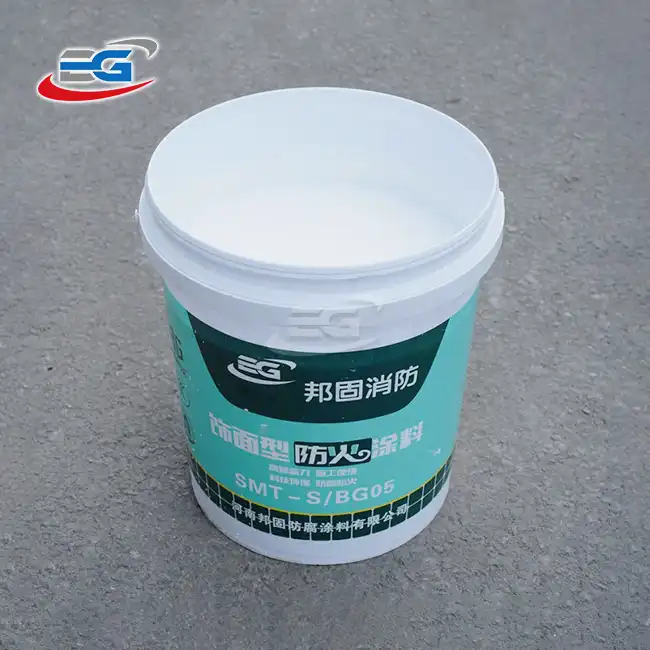
Understanding Long Service Life Finishing Fire Retardant Coatings
What Sets These Coatings Apart?
Within three to five years, a standard fire retardant coating may lose its protective chemistry because it absorbs water, the surface chalks, or chemicals move around. A finishing system with a long service life uses cross-linked resin binders and stabilized flame-retardant compounds to keep a Class A fire rating for a long time, often longer than ten years with proper indoor care.
How Fire Retardant Mechanisms Work?
When heat hits the coating, the intumescent chemistry starts to work and grows into a thick layer of carbonaceous char. This char layer insulates the steel substrate, which slows the transfer of heat and keeps the structure from breaking down sooner. Banggu Fanghuo's finishing-type product has a fire resistance limit of 1.7 hours, which gives people time to get out of the building and gives site managers proof that they are following the rules.
Durability and Environmental Profile
A well-designed finishing coat not only prevents fire, but also mechanical abrasion (Banggu Fanghuo's mixture passes ≥1,000 scrub cycles) and keeps its adhesion at Grade ≤1 by ISO 2409. It is safe for enclosed public areas, like schools and hospitals, where air quality is a real operating worry because it has a VOC content of less than 80 g/L and a Class t0 smoke toxicity grade.
Comparing Fire Retardant Coating Types for Industrial Plants
Intumescent, Cementitious, and Epoxy Systems
long service life finishing type fire retardant coating Intumescent coatings get bigger when they come into touch with heat and work well on steel that is visible in buildings. While cementitious coats offer bulk passive protection, they add weight to the structure and need to be applied thickly. Epoxy-based systems make films that are hard and resistant to chemicals, but they can break easily in places with a lot of vibration. An intumescent system with a finishing type is usually the best choice for buildings that care about both looks and durability.
Long vs. Short Service Life: What the Numbers Say
NFPA data shows that re-application costs are 1.8 to 2.4 times higher for buildings that put off fire coating upkeep than for buildings that are on a responsible long-cycle program. If you use a product with a short service life on a 10,000 m² business building, you might have to re-coat it every three to four years. But if you use a product with a long service life on the same area, you can go ten years or more without having to re-coat it, which saves you money and time.
Chemical Composition and Its Impact on Performance
The amount of intumescent agents, binder flexibility, and plasticizer stability all play a role in how well a coating sticks even after years of changing temperatures and humidity levels. Products that pass the QUV accelerated weathering (ASTM G154) and salt spray tests (ISO 9227) show that their chemistry stays active when stressed. All Banggu Fanghuo products must meet the requirements for ISO 9001, ISO 14001, and ISO 45001 certification.
How to Choose the Right Long Service Life Fire Retardant Coating for Your Plant?
Define Your Facility Requirements First
First, check the state of your material. The most common reason for premature delamination is rust, old coatings, or contaminants that are still present. Write down the grade of structural steel, the range of humidity inside, and whether the place will be filled during the application. This information is used to choose products and decide which primers will work with them.
Before deciding on a coating specification, procurement teams should make sure they meet these main selection criteria:
- Fire resistance rating: Confirm the required hourly rating (e.g., ≥1.7h for heavy steel members) matches your local building code and insurer's requirements.
- VOC compliance: For occupied or sensitive spaces, target VOC ≤80 g/L to avoid odor complaints and comply with indoor air quality regulations.
- Substrate compatibility: Verify that the chosen system includes a primer tested for adhesion to your specific base—bare steel, previously coated, or mildly corroded.
- Application conditions: Banggu Fanghuo's product requires ambient temperature +5–40°C, relative humidity ≤85%, and substrate temperature ≥3°C above the dew point.
If a coating fails at the adhesion layer within two years, it costs a lot more than a higher-quality product that works for ten years. This is directly related to the lifecycle cost argument.
Certifications and Compliance Documentation
Ask for test results from a third party from a reputable organization like Intertek or UL. For government purchases and audit approval, you need batch-traceable proof of the Dry Film Thickness (DFT), expansion ratio, and fire resistance limit tested according to EN 13501-1 or a national standard that is the same.
OEM and Custom Order Options
Custom formulations are important for big projects like airport or hospital renovations, which often have purchase values in the $150,000 to $200,000 range. Banggu Fanghuo provides both OEM and ODM services. Procurement managers can choose the color, packaging, and marking, and the factory will take care of the approved fire performance chemistry.
Best Practices for Application and Maintenance of Fire Retardant Coatings
Surface Preparation Is Non-Negotiable
Clean the base to get rid of dirt, paint that has come off, and corrosion. When it comes to steel, Sa 2.5 blast cleaning is the standard. Before the finishing coat, use a base that works with the long service life finishing type fire retardant coating, and let it fully set before adding the next layer. Skipping this step is the main reason why warranties are worthless and films fail early.
Application Guidelines and Environmental Controls
The finishing layer from Banggu Fanghuo can be put on with a brush, a roller, or a spray. Under normal indoor conditions, it takes two hours for a surface to dry. Coverage is 4–6 m²/kg, so figuring out the right amount before the project starts keeps it from getting held up in the middle of the work. The base recipe is designed to protect indoors, so do not use the covering outside for long periods of time without adding an extra UV/weather-resistant topcoat layer.
Inspection and Maintenance Scheduling
Do visual checks once a year to look for mechanical damage, edge lifting, or color changes. Chemically active surface treatments need to be re-saturated every so often, but a long-lasting finishing coat only needs to be fixed where it gets damaged. Keep a service life logbook as an audit trail—auditors and building owners always ask for this during compliance reviews.
Procurement Tips and Market Insights for Bulk Buying
Verifying Supplier Credibility
Before placing an order, make sure that the long service life finishing type fire retardant coating supplier has ISO certificates, fire test reports, and case study references. Formed in 2019, Banggu Fanghuo builds on the 30 years of formulation experience of its predecessor, Henan Tiantan Anti-corrosion Co., Ltd. It has ISO 9001, ISO 14001, ISO 45001, CE, and FDA certifications, which means it can provide most global buying teams with the paperwork they need.
Total Cost of Ownership Over Upfront Price
When a facility manager only talks about unit price, they often find out how much something really costs after the second application. When you add up the costs of labor, temporary facility closures, improving air quality for VOC-heavy products, and re-testing for compliance, a premium long-service-life product usually ends up being cheaper after ten years. Ask your supplier for a lifecycle cost comparison. Banggu Fanghuo offers professional help before the sale, such as building solutions and cost optimization analysis.
Logistics and Custom Ordering
Banggu Fanghuo has permits to move goods by both land and sea, which speeds up delivery to project areas in the US and around the world. For large project orders, you can negotiate minimum order amounts, lead times, and how the items are packed. Contact admin@bgfireproof.com early on in the buying process to make sure that the production schedule fits with the schedule for your project.
Conclusion
Long service life finishing type fire retardant coating is a high-performance intumescent solution for exposed steel structures in hospitals, schools, airports and commercial buildings. Unlike standard coatings that degrade within 3–5 years, it maintains Class A fire rating for over 10 years indoors, delivering a 1.7-hour fire resistance limit by forming insulating carbonaceous char. Featuring low VOC (≤80 g/L), Class t0 smoke toxicity and excellent abrasion resistance, it suits occupied public spaces. Outperforming cementitious and epoxy systems in aesthetics and durability, it cuts long-term re-coating costs. Fully certified and customizable, it requires standardized surface preparation and routine inspection for stable long-term protection.
FAQ
How often does a finishing-type fire retardant coating need to be reapplied?
With proper surface preparation and indoor application, a long-service-life finishing coat can maintain its fire protection properties for ten years or more. Annual inspections are recommended, but full reapplication is only needed when physical damage or significant film loss is detected.
Can this coating be used in high-humidity indoor environments?
Yes, provided application conditions are met: ambient temperature between +5°C and +40°C, relative humidity ≤85%, and substrate temperature at least 3°C above the dew point. Banggu Fanghuo's formulation passes 48-hour heat and humidity resistance testing with no blistering or discoloration.
What certifications should I verify before purchasing?
Look for ISO 9001 (quality management), ISO 14001 (environmental management), and third-party fire test reports citing fire resistance limits, DFT specifications, and smoke toxicity classification. Banggu Fanghuo holds all three ISO certifications plus CE and FDA compliance documentation.
Is this coating suitable for occupied facilities during application?
The water-based version has a VOC content of ≤80 g/L and a Class t0 smoke toxicity grade, making it practical for occupied or partially occupied spaces. Surface drying completes within two hours, minimizing disruption to daily operations.
Does the coating work on previously painted steel?
Compatibility with existing coatings depends on the condition and type of the existing layer. A site-specific substrate assessment and primer selection are recommended before application on previously coated steel structures.
Contact Banggu Fanghuo for Your Long-Life Fire Coating Project
Banggu Fanghuo offers certified long service life finishing type fire retardant coatings. They have 30 years of experience in formulating these coatings, full ISO certification, and flexible OEM/ODM options for large project orders. Whether you are a procurement engineer planning a new installation or a facility manager planning a renovation, our technical team can help you with the pre-sales substrate assessment, construction planning, and long-term maintenance. Email admin@bgfireproof.com to get a price or get the product info sheet.
References
1. National Fire Protection Association (NFPA). Fire Protection Handbook, 21st Edition. NFPA, 2019.
2. ASTM International. ASTM E84: Standard Test Method for Surface Burning Characteristics of Building Materials. ASTM International, 2023.
3. European Committee for Standardization. EN 13501-1: Fire Classification of Construction Products and Building Elements. CEN, 2018.
4. Society for Protective Coatings (SSPC). Steel Structures Painting Manual, Volume 1: Good Painting Practice. SSPC, 2020.
5. International Organization for Standardization. ISO 9227: Corrosion Tests in Artificial Atmospheres—Salt Spray Tests. ISO, 2022.
6. Bayliss, D.A., and Deacon, D.H. Steelwork Corrosion Control, 2nd Edition. Spon Press, 2002.

USER EVALUATE
Here is the customer's evaluation of us
YOU MAY LIKE
 VIEW MOREFlame retardant coating for cable
 VIEW MOREFinishing type fire retardant coating eco-friendly
 VIEW MOREFire Retardant Coating with Smooth Finish
 VIEW MOREFireproof Coating for Steel Structures long fire resistance time
 VIEW MOREeco-friendly fireproof coating
 VIEW MOREwaterproof fireproof coating
 VIEW MOREfire resistant coating
 VIEW MOREfire retardant coating